OpenAI Ads give businesses a way to reach people during that process. For small business owners, that creates an opportunity worth understanding—and testing with a clear plan.
But a new advertising channel still needs to earn its place in your budget. Before you invest, you should understand how ChatGPT advertising works, what it can realistically offer, and how you’ll measure success.
What Are OpenAI Ads?
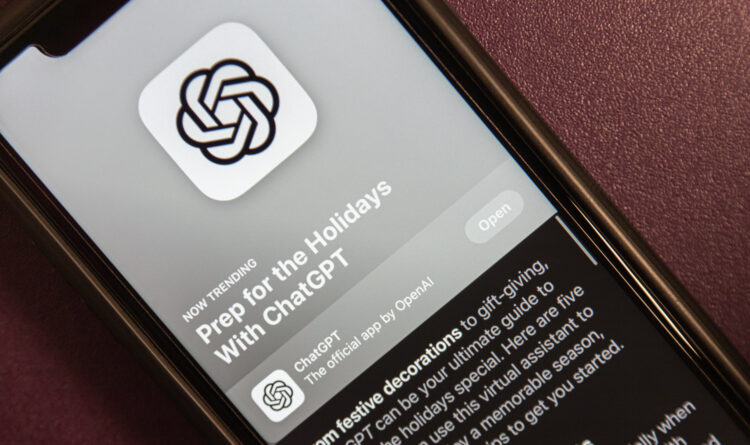
OpenAI’s advertising offering lets businesses place paid ads in ChatGPT. Ads appear below responses and can include a business name, headline, description, image, and link to a landing page. OpenAI considers conversation context and other relevance signals when deciding which ads to show.
Businesses can create and manage campaigns through OpenAI’s self-serve Ads Manager, which launched in beta in May 2026. The platform supports campaign budgets, bidding, ad creation, and performance reporting.
Advertising also has a clear boundary: paid placements are labeled and separate from ChatGPT’s answers. Buying an ad does not buy influence over the answer itself.
Why Small Businesses Should Pay Attention
Consider a hypothetical customer planning a community fundraiser. They might ask about event supplies, compare printing options, and narrow down what fits their budget. A business selling custom banners could have a useful offer for someone working through those decisions.
That suggests a practical approach to ad creative: explain the specific problem your business solves.
For a custom printing company, a message like “Custom event banners with clear pricing and easy ordering” gives a prospective buyer something concrete to evaluate. Broad claims such as “Your partner for every possibility” leave more work for the reader.
OpenAI allows advertisers to provide “context hints” describing relevant topics or situations. These help guide matching, but they are not exact-match keywords and do not guarantee placement in a particular conversation.
For small businesses, the takeaway is straightforward: build your campaign around a clear customer need, a relevant offer, and a useful next step.
What to Know Before Spending
At the time of this post, ChatGPT Ads remains in beta. Access depends on country availability, and features and delivery can change as the platform develops. OpenAI also says it does not yet have established performance benchmarks across industries and campaign types.
That means claims of universally cheaper leads or guaranteed returns deserve scrutiny. Your results will need to come from your own campaign data.
Budget settings also matter. A daily budget is an average spending target; spending can exceed that amount on an individual day within OpenAI’s published limits. A campaign-total budget provides a stricter control over spending across the campaign’s duration.
Our recommendation: choose a test budget your business can comfortably evaluate, and decide what would justify continuing before you launch.
How to Build a Useful First Test
A focused campaign is easier to assess than one trying to promote everything you sell.
- Choose one business outcome. Decide whether you want purchases, qualified inquiries, or another measurable action. Define what counts as a good result.
- Start with one strong offer. Pick a product or service with clear benefits and an audience you understand. A specific offer makes it easier to judge whether the message connects.
- Use a matching landing page. If your ad promotes custom event banners, send visitors to a page about those banners. Include helpful product details, accurate pricing information where appropriate, and an obvious next step.
- Set up measurement before launch. OpenAI supports pixel-based measurement and a Conversions API for tracking actions such as purchases and leads. Advertisers receive aggregated insights without access to individual ChatGPT conversations.
- Review customer quality alongside cost. A low-cost inquiry is only valuable if it has a reasonable chance of becoming business. Track whether leads are relevant, whether they convert, and what those customers are worth.
For example, a hypothetical campaign spending $300 to generate 10 qualified inquiries has a $30 cost per qualified inquiry. If two become customers, the advertising cost per customer is $150. Those figures are an illustration, not a ChatGPT Ads benchmark. Whether they work depends on your margins and other acquisition costs.
Where Does this Fit in Your Marketing Plan?
Our recommendation is to give emerging channels a defined job and a measurable test.
Keep funding the marketing activities that reliably bring in customers. Then evaluate ChatGPT Ads against a specific objective, using the same business standards you apply elsewhere.
A promising first test might reveal a message customers respond to, an offer worth expanding, or a landing page that needs improvement. Each finding can help you make a better spending decision.
Ready to explore OpenAI Ads for your small business? Contact Big Shark Marketing to discuss your goals and where ChatGPT advertising could fit into your marketing plan.